
Lebanon County Criminal Court Records
Criminal court records in Lebanon County are maintained through Pennsylvania's unified judicial system and local filing offices. The Clerk of Courts is the filing office for Court of Common Pleas criminal and juvenile matters. Its official page states that criminal and juvenile records are available to the public unless specifically precluded by law. Public docket sheets can show charges, bail, court events, dispositions, sentences, counsel, and docket entries.
Criminal cases may begin with a summons or warrant, then move through preliminary arraignment and preliminary hearing before a Magisterial District Judge. If enough evidence exists, the case moves to Common Pleas. The Public Defender page describes later stages including formal arraignment, call of the list, trial, and sentencing. For the charge list itself, use the Lebanon County court charge records page; for all case types, use court records.
The image from the Lebanon County District Attorney page connects criminal court records to the office that prosecutes Common Pleas criminal cases.
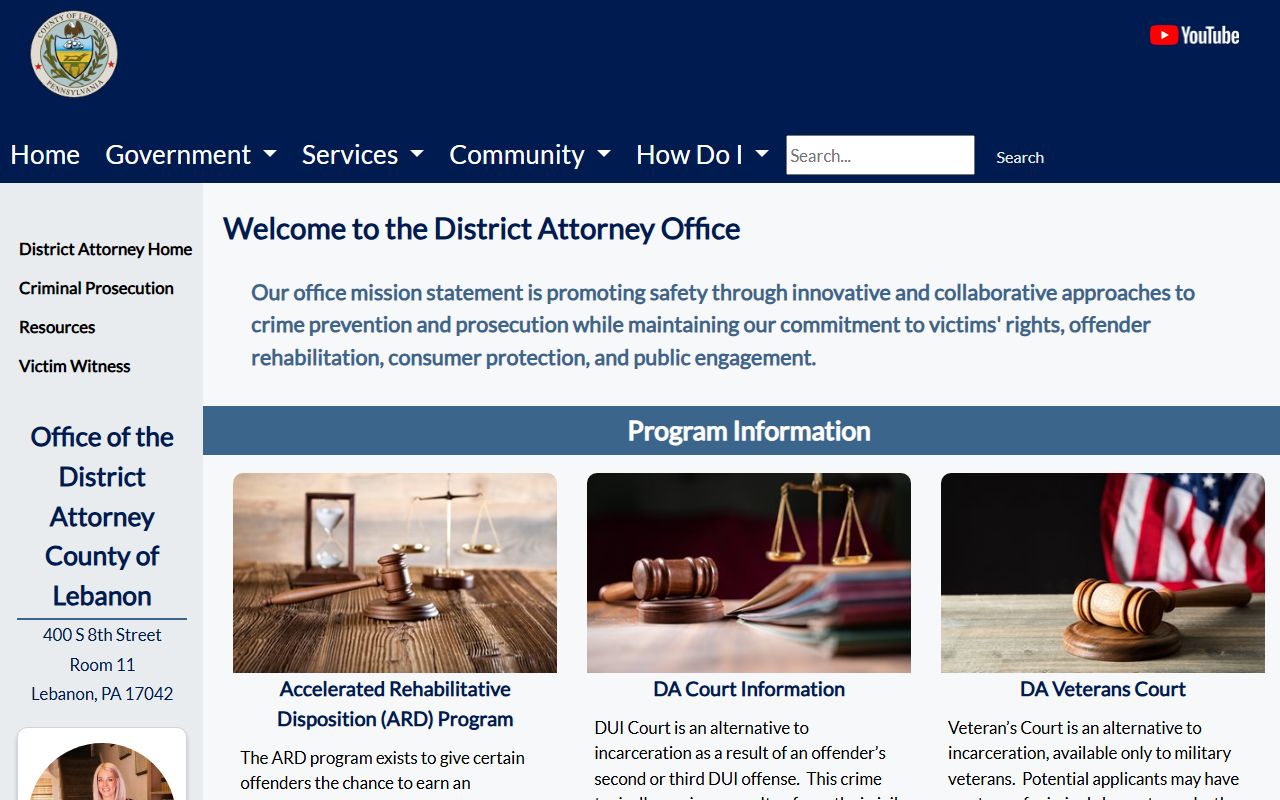
DA filings and prosecution decisions affect the charges, dispositions, diversion options, and sentencing entries later seen on a criminal docket.
Search Lebanon County Criminal Court Records
UJS Case Search is the main free search point for Lebanon County criminal docket sheets. Search by participant name, docket number, OTN, complaint number, incident number, or calendar event, then narrow to Lebanon County or Judicial District 52. A known Common Pleas criminal docket can use a format such as CP-38-CR-0000430-2023.
- Open UJS Case Search and choose Docket Number, Participant Name, OTN, Complaint Number, or Calendar Event.
- Set the county filter to Lebanon or the judicial district filter to Lebanon - 52.
- Open the criminal docket sheet and review the header, events, charges, bail, entries, disposition, and sentence fields.
- Confirm whether the case began in a Magisterial District Court and then moved to Common Pleas.
- Contact the Clerk of Courts in Room 102 for public criminal file access or certified copy questions.
The Clerk of Courts office is in Room 102 of the Municipal Building, 400 South 8th Street, Lebanon, PA 17042-6794. The phone number is 717-228-4419, and public hours are Monday through Friday, 8:30 a.m. to 4:30 p.m.
Lebanon County Criminal Case Flow
Criminal court records should be read as a sequence. A single docket may show lower-court activity, Common Pleas filings, bail decisions, list dates, motions, pleas, verdicts, and sentencing. The Public Defender page names the usual stages: summons or warrant, preliminary arraignment, preliminary hearing, formal arraignment, call of the list, trial, and sentencing.
Case flow: Charges Filed › Preliminary Arraignment › Preliminary Hearing › Common Pleas Filing › Pretrial / Motions › Plea or Trial › Disposition › Sentencing
| Stage | What Happens |
|---|---|
| Preliminary arraignment | A Magisterial District Judge advises the defendant of charges and sets bail. |
| Preliminary hearing | The Commonwealth presents evidence; if sufficient evidence exists, charges move toward Common Pleas. |
| Formal arraignment / call of list | The Common Pleas docket may list formal arraignment, call of the list, pre-trial conference, or trial readiness events. |
| Plea or trial | The record may show a guilty plea, verdict, continued trial, or other disposition by count. |
| Sentencing | Sentence date, judge, sentence type, incarceration or diversion period, credit for time served, and conditions may appear. |
What Lebanon County Criminal Records Show
The sample criminal docket reviewed in the research showed fields that matter when reading a Lebanon County criminal court record. Each field should be checked against the date and case stage. A charge shown near filing may later be amended, dismissed, reduced, or resolved at sentencing.
| Field | What It Shows |
|---|---|
| Docket number | Common Pleas identifier, court division, county number, case type, sequence, and year. |
| Defendant information | Name, participant type, DOB, and address fields where public. |
| Charges | Sequence, grade, statute, statute description, offense date, and OTN. |
| Bail | Bail type, amount, action date, surety, posting status, security, and originating court. |
| Events | Arraignment, call of list, motion, criminal jury trial, pre-trial conference, or sentencing settings. |
| Disposition and sentence | Disposition date, final disposition marker, sentence type, sentence date, judge, and conditions. |
Lebanon County Charges vs Convictions
A criminal court record can contain both accusations and final outcomes. A charge row means an offense was alleged or filed. It does not, by itself, prove a conviction. The disposition and sentence sections are where the final result becomes clearer, and each count can have its own outcome.
| Charge | Conviction | |
|---|---|---|
| Meaning | An allegation filed in court by complaint, citation, or information. | A final guilty verdict or guilty plea on a count. |
| Where it appears | Charge rows with statute, grade, offense date, and OTN. | Disposition and sentencing rows. |
| Can change | May be amended, reduced, dismissed, or withdrawn. | May lead to sentence, probation, diversion terms, costs, fines, or restitution. |
Read Dispositions and Sentences
Disposition means the outcome of a case or charge. The sample docket inventory included offense disposition, disposition date, final disposition marker, grade, statute section, sentencing judge, sentence date, sentence or diversion type, incarceration or diversion period, credit for time served, and sentence conditions. Financial rows may also show costs, fines, restitution, payment plans, and PAePay eligibility.
Lebanon County publishes a criminal jury trial list that can show courtroom numbers, docket numbers, verdicts, sentencing dates, continued trials, and reporting times. It is a current scheduling and result page, not a full case file. Use the docket sheet and Clerk of Courts for the case record itself.
Sealed vs Expunged Records
Pennsylvania limited access and expungement are separate ideas. Limited access removes eligible records from public view, while criminal justice agencies, courts, and sentencing uses may retain access. Expungement is a stronger remedy for eligible records, but it requires the correct petition and court action before a record should be treated as removed.
| Limited Access / Sealed | Expunged | |
|---|---|---|
| Public visibility | Hidden from general public view when eligible and ordered or applied by law. | Removed or destroyed from public access where Pennsylvania law allows. |
| Agency access | Criminal justice agencies may retain access. | Access is much narrower and depends on the order and law. |
| Local route | Check UJS and Clerk of Courts instructions. | Use the Clerk of Courts expungement procedure for criminal Common Pleas matters. |
The manifest image from Lebanon County Public Defender reflects the criminal-process and defense-access context for these records.
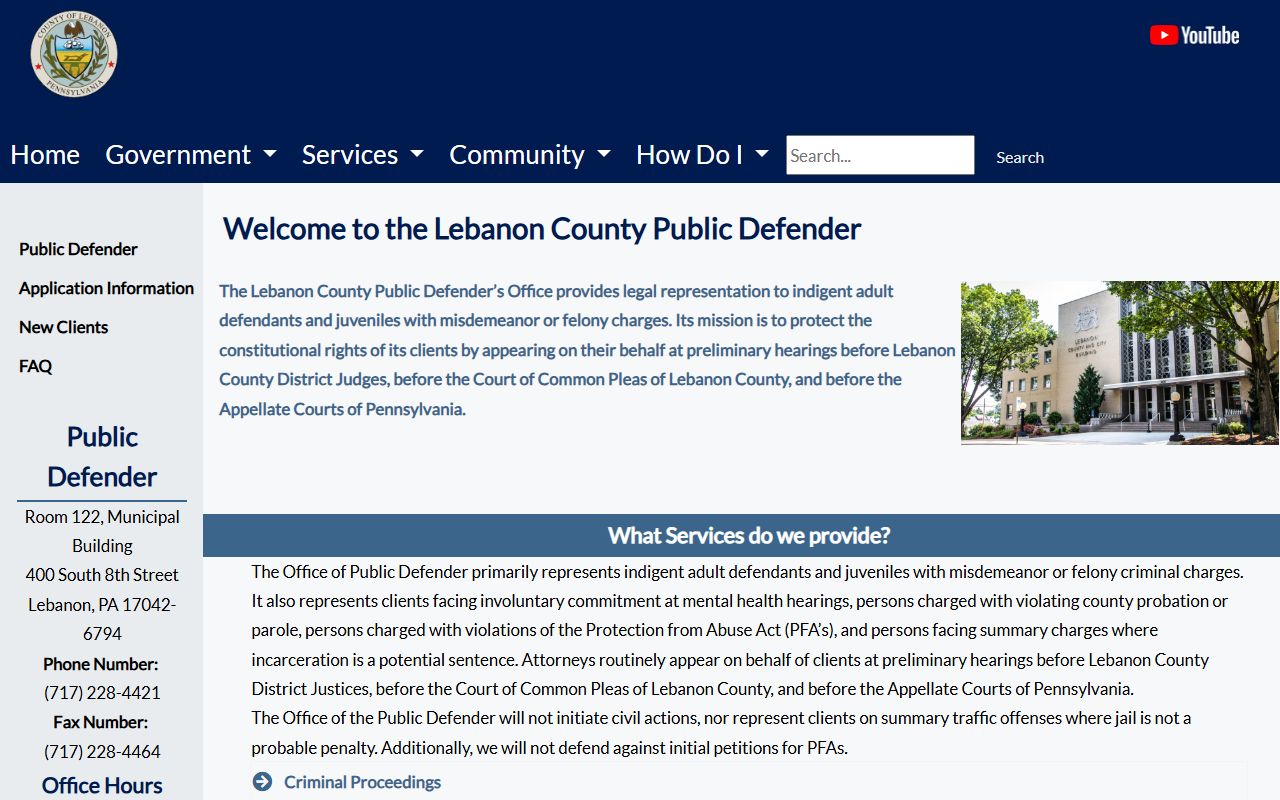
Public Defender eligibility and representation status can appear in criminal docket counsel fields when counsel is appointed.
Public Access to Lebanon County Criminal Records
The Pennsylvania Case Records Public Access Policy governs public access to court case records and confidential filings. UJS Case Search also warns that criminal docket sheets are not criminal-history background checks and should not be used as a substitute for official Pennsylvania State Police criminal-history records. Misuse can create liability for employers and other regulated users.
Key access rules: Court case records use UJS policy, agency records may use RTKL, and criminal-history checks are a separate state process.
The image from Public Defender application information shows the local return channels for defense applications tied to criminal proceedings.
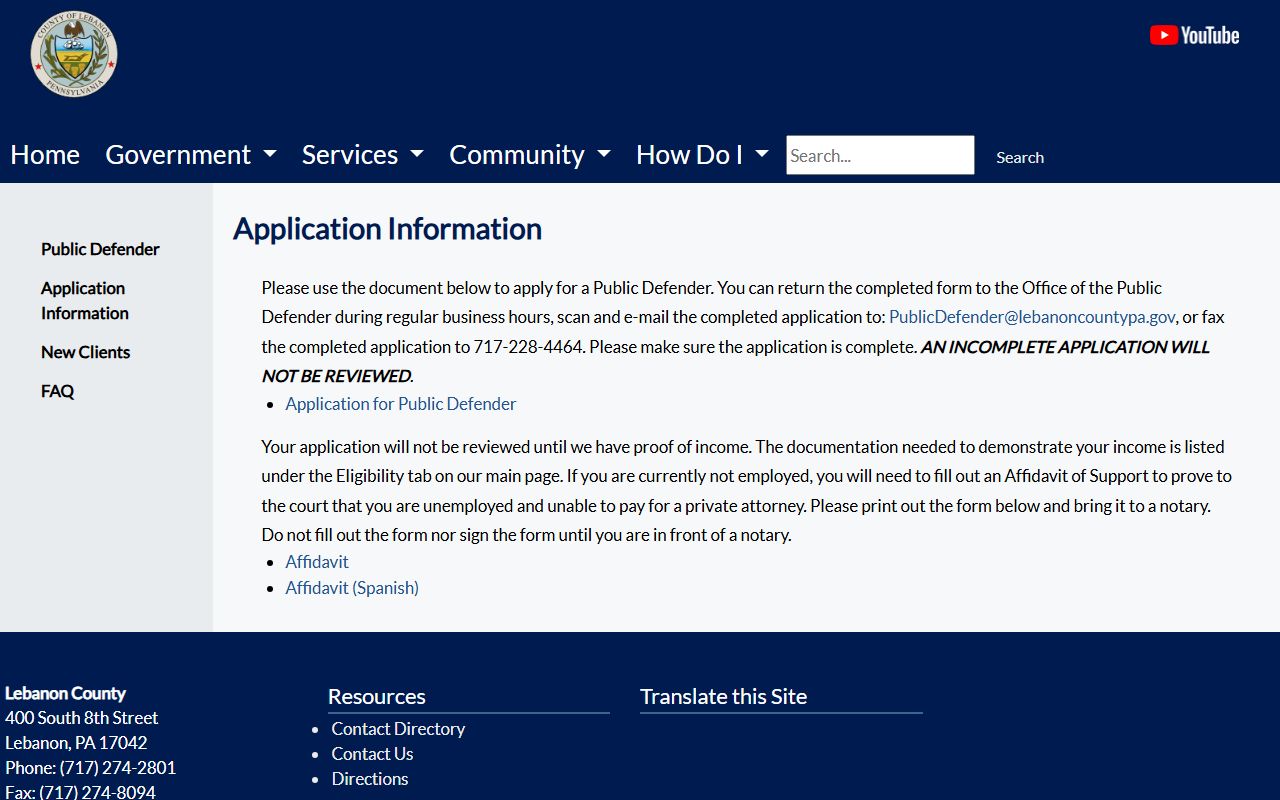
Those application details matter when a criminal docket shows appointed counsel or when an eligible defendant needs representation.
Restricted Lebanon County Criminal Records
Juvenile criminal matters are filed through the Clerk of Courts but may be restricted by law. Sealed, expunged, and limited-access records may not appear in the same way as open public dockets. UJS policy also protects confidential information, including Social Security numbers, financial account numbers, minor information, victim details, and confidential addresses.
The DUI Treatment Court image from Lebanon County DUI Treatment Court shows a local criminal justice program that can affect case handling and docket outcomes.
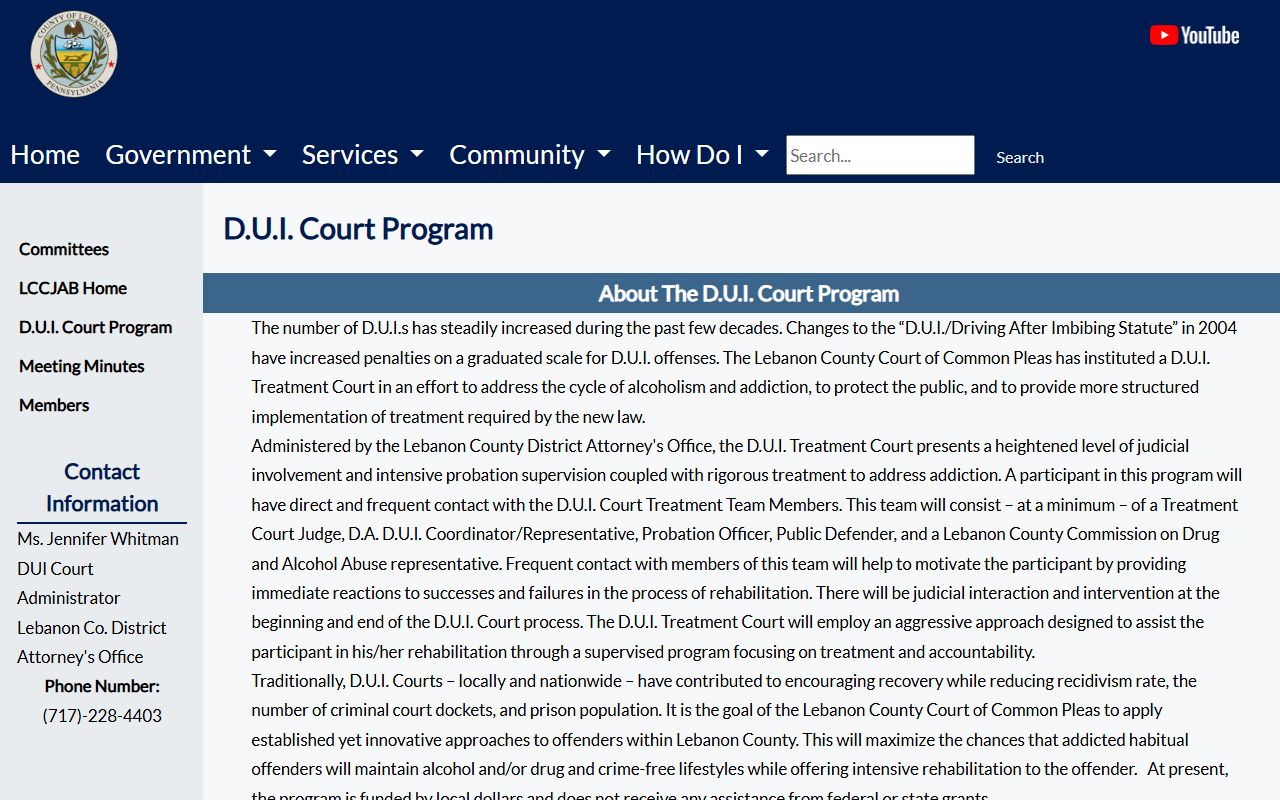
Diversion and treatment-court outcomes should be read from the docket disposition and sentence fields, not assumed from the program's existence.